
Why Build Airtight
The case for airtight construction is usually made on energy. The stronger case is durability, and it is the one that matters commercially to a builder.
Durability
A building that manages moisture lasts longer. That is most of the argument.
Air leakage carries moisture into wall and roof assemblies where it condenses, wets framing, and supports mould and decay. Timber that stays wet loses structural capacity. Fixings corrode. Insulation performance degrades. None of this is visible until it is significant.
A sealed, correctly detailed envelope keeps that moisture out. The building’s service life is extended for a small increase in construction cost, and the failures that generate callbacks do not occur.
Callback exposure
For a builder, the practical argument is the one about liability.
Moisture and mould callbacks arrive years after handover. They are expensive to investigate because the evidence is behind linings, expensive to remediate, and difficult to attribute. The conversation about who pays is not a good one.
The measures that prevent them, continuous air sealing, correct membrane class for the climate zone, ventilated cavities, compliant exhaust, add modest cost at construction stage. Relative to the cost of one remediation, they are inexpensive insurance.
Comfort
Draughts, cold surfaces and temperature stratification are all products of air leakage. Occupants describe them as the house being cold or hot rather than as leakage, but that is what they are experiencing.
A sealed building with proper ventilation is more comfortable at the same thermostat setting, which is what clients actually notice and what they tell other people about.
Energy and running costs
Air leakage moves conditioned air out and unconditioned air in. In a cooling climate the humidity arriving with that air is often the larger load, because dehumidification is energy intensive.
Leakage also reduces the effective performance of insulation that is otherwise correctly installed. A building can meet its NatHERS rating on paper and leak enough to undo a meaningful part of it.
Air sealing is generally the cheapest energy improvement available on a residential build. The materials cost little. The cost is attention.
Air quality
A sealed building with controlled ventilation determines where its air comes from. A leaky building does not.
In a leaky building, air arrives through the subfloor, the roof space, the wall cavities and the garage, carrying whatever is in those spaces with it. Controlled ventilation means filtered air from a known intake.
For occupants with asthma or allergies this is the difference clients notice most.
Durability of the finishes
Secondary, but real. Moisture movement through assemblies affects paint adhesion, timber movement, plasterboard joints and floor coverings. Stable internal humidity produces fewer of the small defects that generate warranty calls in the first two years.
The environmental argument
Worth stating, though it is rarely what closes a job.
Reduced operational energy is the obvious part. The larger contribution is longevity: a building that lasts eighty years instead of forty halves its embodied carbon per year of service. Durability is an environmental measure, not just a commercial one.
What it takes
Airtight construction is not expensive and it is not complicated. It requires:
- A defined air barrier plane, drawn and communicated.
- Continuity at every junction, opening and penetration.
- Sealing done as work proceeds, not retrofitted at the end.
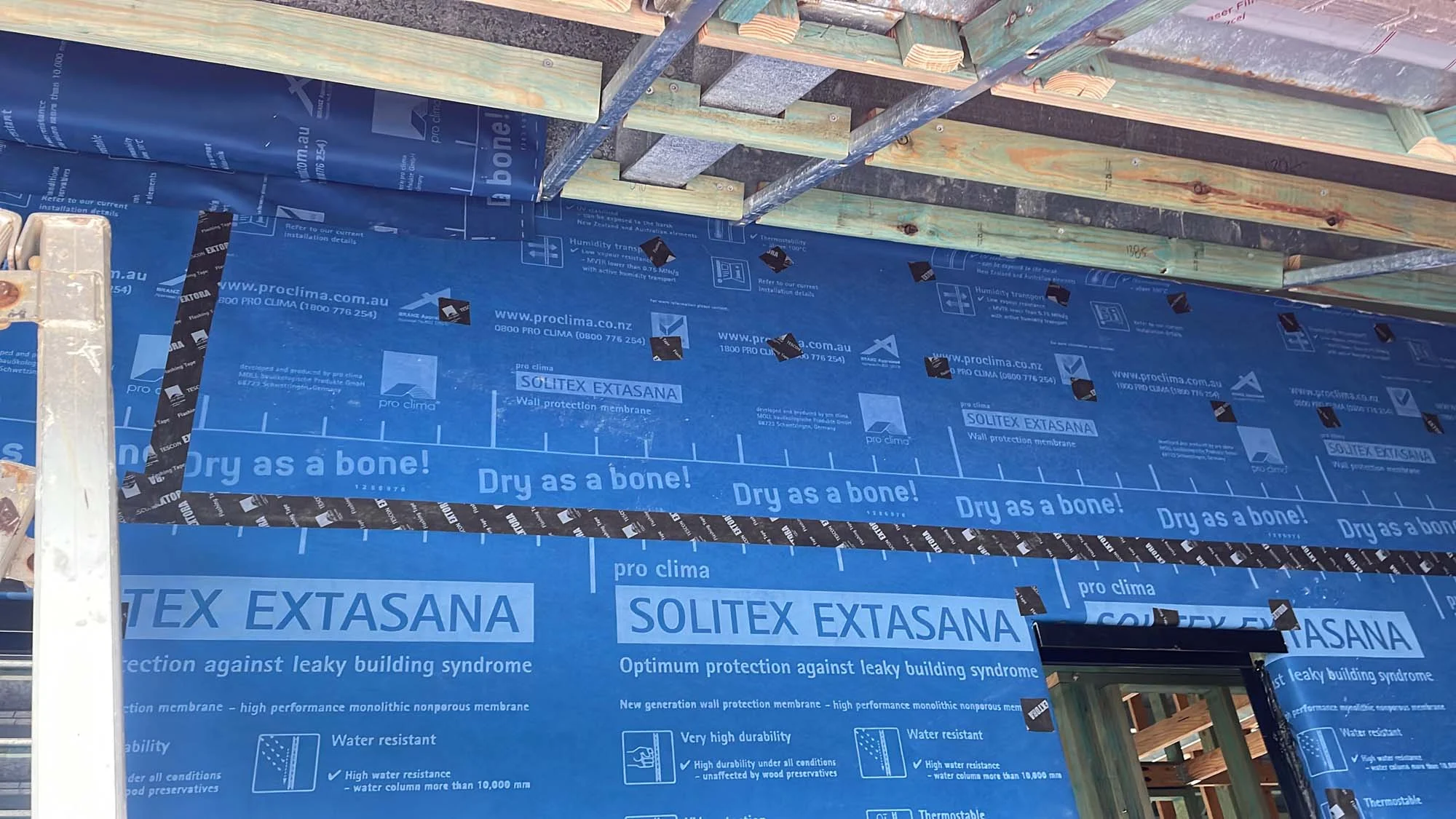
- Proper tapes and membranes rather than general purpose products.
- Testing before linings, while leaks are still reachable.
- Ventilation sized for the moisture load.
None of that is specialist work. It is ordinary work done in the right order with the right materials.