
Weathertightness Membranes and WRBs
What a Weather Resistive Barrier Does
A weather resistive barrier sits behind the cladding, on the outside of the frame or sheathing. Its job is to stop wind and water getting into the structure while letting water vapour out of it.
That second part is the one that gets missed. A membrane that blocks water in both directions traps moisture inside the wall, and moisture that cannot dry out is how framing rots and mould grows. A vapour permeable membrane, one that water cannot pass through but water vapour can, lets the assembly dry outward.
Vapour permeance is measured and classified under AS/NZS 4200.1, from Class 1 (vapour barrier) through to Class 4 (highly vapour permeable). The class you need depends on your climate zone.
NCC 2022 Requirements for External Membranes
NCC 2022 significantly expanded the condensation management provisions. They apply to Class 1 buildings, sole-occupancy units of Class 2 buildings, and Class 4 parts of buildings. Where a pliable building membrane is installed in an external wall:
- Climate zones 4 and 5 require a vapour permeance of not less than 0.143 µg/N.s, which means a Class 3 or Class 4 membrane
- Climate zones 6, 7 and 8 require not less than 1.140 µg/N.s, which means Class 4
There is also a provision worth knowing if you were thinking of leaving the membrane out. Except for single skin masonry and single skin concrete, where no pliable building membrane is installed in an external wall, the primary water control layer must be separated from water sensitive materials by a drained cavity. Skipping the wrap does not remove the obligation, it changes it into a cavity you have to build.
Climate zones 1, 2 and 3, which cover most of Queensland and northern New South Wales, are treated differently. In hot humid climates the vapour drive is often inward rather than outward, so the design question changes. A membrane specified for Melbourne is not automatically right for Brisbane.
It is also worth noting that a membrane can be classified as a water barrier under AS/NZS 4200.1 or not. Not all vapour permeable membranes are water barriers, and if the membrane is doing weather protection during construction it needs to be both.
The SOLITEX Range
SOLITEX membranes are vapour permeable weather resistive barriers using a monolithic TEEE membrane layer, which means the membrane has no pores. Water vapour moves through by molecular diffusion rather than through holes, so the membrane stays watertight even under pressure and does not lose performance when dirty or wet.
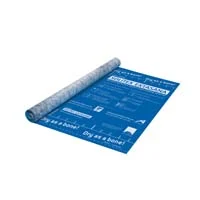
SOLITEX EXTASANA is the general purpose wall underlay, suitable behind most cladding types including fibre cement, timber, weatherboard and steel. Available in 1.5m and 2.74m widths.
SOLITEX EXTASANA ADHERO is fully self-adhered, designed for rigid substrates like OSB and plywood on walls and roofs. Because it bonds to the substrate, a penetration or a nail hole cannot become a leak path across the whole wall. UV resistant for up to 180 days of exposure, which matters when cladding is delayed.
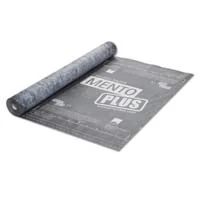
SOLITEX MENTO PLUS is the roof underlay, with an integrated adhesive strip for lap sealing. Available in 1.5m and 3m widths.

Choosing the Right Membrane
Four things decide it:
Climate zone. Determines the minimum vapour permeance class and, in hot humid zones, whether the assembly should be drying outward, inward, or both.
Substrate. Self-adhered membranes need a rigid, continuous substrate. Over open framing you need a mechanically fastened membrane.
Exposure period. If the membrane will be exposed for weeks before cladding goes on, UV resistance and tear strength matter more than anything else.
Cladding and cavity. A ventilated cavity behind the cladding changes the drying behaviour of the whole assembly and is generally worth the extra battens.
If you are not sure, ask at your stockist or call us. We have installed all of these.
Questions About Weathertightness
Do I need a vapour permeable wall wrap in Queensland?
Climate zones 1, 2 and 3 are not covered by the same NCC deemed-to-satisfy provisions as the cooler zones, but condensation risk in humid subtropical climates is real and runs in the opposite direction. A vapour permeable membrane combined with a ventilated cavity is generally the right approach. It is worth a conversation about the specific assembly.
What is the difference between Class 3 and Class 4?
Vapour permeance. Class 3 is greater than 0.143 micrograms per newton second, Class 4 is greater than 1.14. Class 4 lets significantly more vapour through, which is why colder zones with stronger outward vapour drive require it.
How long can SOLITEX be left exposed before cladding?
Up to 180 days for EXTASANA ADHERO. Check the current technical data for each product, as UV exposure limits differ.
Can I use the same membrane on walls and roof?
Sometimes, but roof underlays face different loads: more UV during construction, more water, and different lap sealing requirements. MENTO PLUS is designed for roofs specifically.
Does a wall wrap replace a building's waterproofing?
No. A WRB is a secondary barrier behind the cladding, not a waterproofing membrane.
Find a Stockist
Pro Clima weathertightness membranes are available through stockists across New South Wales and South East Queensland.